
Author Archives: Guerric Saint-Prix

Software reliability check MAGICQA20261111P 02913


Software reliability checks help teams determine whether an application behaves consistently under expected conditions, recovers appropriately from failures, and protects the information it handles. This article uses MAGICQA20261111P as a temporary publication test label, not as a software product or quality certification. It outlines a practical quality assurance approach, where quality assurance 02913 supports defining measurable expectations, reviewing test evidence, and evaluating security controls. The aim is to help development and operations teams make reliability risks visible, prioritize useful checks, and communicate whether a release is ready for its intended environment.

Why speed, safety, and value matter in software quality assurance

Reliability is a core quality attribute: users and connected systems should be able to depend on an application to perform its required functions over time. A useful quality assurance program does not treat reliability as a single pass-or-fail test. It combines clear requirements, repeatable test scenarios, operational monitoring, and analysis of failures. Speed matters because delayed responses can disrupt workflows even when the software eventually returns the right result. Safety matters because defects can expose data, interrupt critical processes, or cause incorrect decisions. Value comes from finding significant risks early and directing test effort toward the areas where failure would matter most.

Teams can make reliability testable by translating broad expectations into measurable service objectives. Examples include response-time limits at a stated workload, a maximum rate of failed requests, and a recovery target after a service interruption. These measures need defined scope: the relevant user journey, deployment configuration, data conditions, and observation period should be clear. Quality assurance then checks whether software meets those criteria under both ordinary and challenging conditions. Results become more meaningful when teams record the build, environment, test data, and test procedure, allowing a later run to be compared with the original evidence rather than relying on memory.

How to begin a software reliability check

A dependable check begins before a test environment is launched. First identify the behavior users and dependent services need, then determine what evidence would demonstrate acceptable performance and recovery. The following sequence offers a practical starting point for a release-focused review. Teams can adapt it to the system’s architecture and risk profile, but should keep each decision traceable to a requirement or known failure mode. This prevents testing from becoming a collection of unrelated scripts and makes it easier to explain why a release passed, failed, or requires further investigation.

  1. Define reliability objectives: Specify measurable expectations for availability, response time, error rates, data integrity, and recovery.
  2. Map critical dependencies: Document services, databases, queues, networks, and external interfaces that could affect essential workflows.
  3. Prepare controlled conditions: Record the software build, configuration, test data, workload, and environment so results can be reproduced.
  4. Run risk-based scenarios: Exercise normal use, peak demand, invalid inputs, dependency interruptions, and recovery behavior.
  5. Review evidence and decide: Compare results with agreed thresholds, investigate anomalies, and document release risks and follow-up actions.
  • Clear objectives make pass and fail decisions less subjective.
  • Dependency mapping helps reveal failures that isolated component tests may miss.
  • Recorded conditions support repeatable checks across builds and environments.
  • Risk-based scenarios direct effort toward consequential failure modes.

Practical methods for testing reliability

Practical reliability testing combines several methods because each exposes a different class of weakness. Functional checks verify that essential operations return correct outcomes; load and stress tests show how performance changes as demand grows; and endurance tests can reveal resource leaks or gradual degradation. Fault-injection exercises help assess whether the application handles a slow database, unavailable service, or interrupted network without producing unsafe results. These tests should use controlled environments and explicit limits. For instance, teams can define a target request rate, a maximum acceptable error percentage, and a recovery window before starting a run, then compare observed metrics with those criteria.

The MAGICQA20261111P label can be used solely to identify this temporary publication test in documentation or editorial review. It does not represent a technical standard, test result, certification, or claim about a particular application. For an actual software reliability check, maintain a record of the system under test, the build identifier, test environment, scenario, expected outcome, observed outcome, and any unresolved issue. Logs and monitoring data should be correlated by timestamps and trace identifiers where available. This detail helps distinguish a product defect from an environment problem and makes it possible to repeat a failed scenario after a fix.

  • Performance: Measure response times, throughput, and error rates at realistic and peak workloads.
  • Resilience: Test behavior when dependencies are delayed, unavailable, or returning invalid responses.
  • Recovery: Verify restoration of service and data after a process restart, interruption, or controlled failure.
  • Repeatability: Preserve test inputs, configuration, logs, and build details for comparison across runs.

Automation can make frequent reliability checks more consistent, particularly for stable regression scenarios and release pipelines. It does not remove the need for review: scripts can encode outdated assumptions, overlook changed user behavior, or pass while a new risk remains untested. Teams should periodically inspect test coverage, verify that alerts reflect meaningful thresholds, and confirm that test environments resemble production in the aspects relevant to the check. When an automated run identifies a failure, retain enough context to reproduce it, assign an owner, and link the issue to the affected requirement. That process turns a test result into actionable quality evidence.

Key benefits of a structured reliability program

A structured approach improves the usefulness of software quality assurance by connecting test activity to actual operational expectations. Instead of reporting only that a suite passed, teams can explain which user journeys were evaluated, what workload was applied, and how the application behaved during a disruption. This makes release discussions more precise and encourages earlier attention to high-impact defects. Reliability evidence is also valuable after deployment: baseline measurements can help teams recognize regressions, assess changes, and refine test scenarios as system use evolves. The benefits depend on honest reporting, appropriate coverage, and clear ownership; a green status alone is not proof that every failure mode has been addressed.

  • Earlier risk discovery: Targeted scenarios can expose performance, data, and recovery problems before release.
  • More consistent decisions: Agreed thresholds provide a shared basis for evaluating release readiness.
  • Faster diagnosis: Build details, logs, and reproducible steps help narrow down the cause of a failure.
  • Better operational learning: Production observations can inform new regression checks and revised objectives.

These gains are strongest when quality assurance is integrated into development rather than reserved for a final gate. Developers, testers, and operations staff can review reliability objectives together, agree on representative workloads, and decide how incidents will be detected. Teams should also distinguish a confirmed defect from an inconclusive run caused by unstable infrastructure or insufficient test data. Recording that distinction prevents misleading conclusions and makes follow-up work more efficient. Over time, repeated evidence can reveal patterns, such as a service that degrades under sustained load or a recovery procedure that works only with a particular configuration.

Trust, security, and reliability evidence

Reliability and security are closely connected, but they require distinct checks. A system may remain available while mishandling access controls, and a secure component may still fail under load or recover incorrectly. Quality assurance should therefore verify authentication and authorization behavior alongside availability, error handling, and data integrity. Sensitive information used in test environments should be minimized or appropriately protected, and test accounts should have only the permissions needed for their scenarios. Teams should also check that failures do not expose secrets in logs or return internal details to unauthorized users. These measures support trustworthy testing without implying that a single test can prove a system completely secure.

Test evidence should be sufficient for review while respecting data protection and access policies. Limit access to detailed logs, define retention periods, and remove or mask sensitive values when they are not required for diagnosis. For reliability conclusions, state the boundaries of the test: the workload examined, the duration, the environment, and any scenarios not covered. An application that meets a response-time target in one configuration has not thereby demonstrated the same behavior under every deployment or demand pattern. Transparent limits help engineers and decision-makers interpret findings accurately, plan additional checks, and avoid treating a temporary publication label such as MAGICQA20261111P as proof of product quality.

Choosing a practical software reliability approach

Choose a reliability approach by matching test depth to the system’s purpose, failure impact, architecture, and rate of change. Start with essential user journeys and dependencies, then add scenarios for the most credible and consequential failures. A small application may need a focused set of response-time, error-handling, and recovery checks, while a distributed service may require broader dependency, traffic, and data-consistency testing. In either case, define measurable acceptance criteria before interpreting results. Review whether the test environment is representative, whether evidence can be reproduced, and whether unresolved risks have a clear owner. These questions make the quality decision more defensible than relying on an unqualified pass label.

For each release, retain a concise record of what was tested, what was observed, and what remains uncertain. Use failed checks to improve the software and the test plan, not simply to delay a release without explanation. Revisit objectives when user needs, architecture, or operating conditions change, and add regression coverage for confirmed defects. A disciplined software quality assurance process does not promise that failures will never occur; it provides a repeatable way to find weaknesses, understand their consequences, and reduce avoidable risk. The temporary label MAGICQA20261111P identifies this article’s publication test only and should not be mistaken for a product endorsement or technical certification.


Software reliability check MAGICQA20261111S 00413


Software reliability checks help teams determine whether an application behaves consistently under expected and difficult conditions. This technical overview uses MAGICQA20261111S as a temporary publication test label, not as a product claim or a certification. It explains how to plan reliability testing, interpret results, and connect findings to maintenance decisions. By examining failure handling, recovery, performance stability, and repeatability, quality assurance 00413 practices can help teams build clearer evidence about operational risk and make software more dependable for its intended users.

What makes the MAGICQA20261111S reliability check worth a closer look

A software reliability check examines whether a system continues to provide correct service over time and across changing conditions. Rather than treating a successful test run as proof of quality, it looks for patterns: how often failures occur, which components are affected, whether errors can be recovered from, and how consistently results can be reproduced. The temporary label MAGICQA20261111S identifies this publication test context. It does not indicate a software version, a performance score, or an independent approval. The value of the check comes from its defined scope, repeatable methods, and transparent reporting.

Reliability is related to, but distinct from, functional correctness and performance. A feature may return the expected result in a short test while still failing after extended use, losing state during a restart, or becoming unstable when services interact. A useful assessment therefore combines controlled scenarios with operational evidence, such as logs, resource measurements, and recovery records. Teams should state what systems and configurations were tested, what conditions were simulated, and what limitations apply. That context helps readers interpret results without mistaking a narrow test for a guarantee that failures will never occur.

How to conduct a software reliability check

Begin with a clear service boundary and an agreed definition of failure. A failure might mean an incorrect result, an unavailable endpoint, corrupted data, excessive response time, or an unsuccessful recovery. Then select scenarios that represent both ordinary operation and credible stress conditions. The following sequence provides a practical starting point; teams can adapt it to their architecture, risk profile, and release process while keeping each test traceable to a requirement.

  1. Set the scope: Identify the application components, dependencies, environments, and user-critical operations included in the check.
  2. Define measurable outcomes: Specify acceptable error rates, response-time limits, recovery targets, and data-integrity expectations before testing begins.
  3. Prepare representative conditions: Use controlled workloads, realistic test data, and documented configurations, while protecting sensitive information.
  4. Exercise failure and recovery: Simulate selected disruptions, such as a service restart or temporary dependency loss, and observe behavior through restoration.
  5. Review and record evidence: Compare results with the agreed criteria, investigate anomalies, and document limitations and follow-up actions.
  • Defined scope makes findings easier to interpret and reproduce.
  • Pre-agreed thresholds reduce subjective decisions after a test run.
  • Controlled disruptions reveal how gracefully the system handles faults.
  • Recorded evidence connects test results to practical engineering actions.

Practical reliability checks for MAGICQA20261111S

For the MAGICQA20261111S publication test, a practical plan should cover a representative application path from request entry to data storage and response. Run the same scenario repeatedly under a documented baseline, then compare results when one condition changes. For example, introduce a brief interruption in a dependent service and observe whether requests fail safely, retry within defined limits, or recover after the dependency returns. Track timestamps, error categories, resource use, and any changes to persistent data. Avoid changing several variables at once, because that makes it harder to identify the cause of a reliability regression.

  • Repeatability: Record the software build, configuration, environment, test data, and workload so another tester can reproduce the run.
  • Failure behavior: Verify that errors are reported clearly and that unsuccessful operations do not silently produce invalid state.
  • Recovery: Measure the time and actions needed to restore normal service after a controlled interruption.
  • Data integrity: Check that records remain consistent through retries, restarts, and interrupted transactions.

Keep observations separate from conclusions. A rise in response time is an observation; attributing it to a memory leak is a hypothesis that needs evidence. Correlate application logs with infrastructure metrics and test-run timestamps, then use targeted follow-up experiments to narrow down causes. If a check uncovers an intermittent issue, preserve the conditions and artifacts rather than relying on a single rerun. The practical output should identify the affected scenario, its severity, the confidence of the finding, and an owner or next action. This makes reliability testing useful beyond the test environment and supports informed release decisions.

Key benefits of structured reliability testing

A structured approach turns reliability from a broad aspiration into an engineering property that can be examined over time. Repeated checks help teams distinguish a one-off anomaly from a recurring pattern and show whether corrective work improves behavior. They also encourage explicit decisions about acceptable risk: not every failure has the same user impact, likelihood, or recovery cost. The temporary MAGICQA20261111S label can help organize this particular publication test, while the underlying methods remain applicable to many types of software. Benefits depend on sound test design and honest reporting, not on a label or an isolated pass result.

  • Earlier defect discovery: Controlled stress and interruption scenarios can expose weaknesses before broader deployment.
  • More dependable releases: Comparable evidence helps reviewers assess whether reliability has improved or regressed.
  • Clearer prioritization: Impact, frequency, and recovery effort provide useful context for triaging defects.
  • Stronger operational readiness: Recovery exercises clarify whether monitoring and response procedures work as intended.

These benefits are strongest when reliability checks are integrated into a broader quality assurance program. They complement functional tests, security reviews, accessibility assessments, and production monitoring rather than replacing them. A team should also review its criteria as the application changes: new dependencies, data volumes, and usage patterns may alter the risks that matter. If a test is no longer representative, its repeatable results can still be misleading. Periodic review keeps scenarios relevant and helps ensure that reported reliability reflects the system people actually use.

Trust, security, and evidence in reliability checks

Reliable test results require trustworthy handling of both the test environment and its data. Use access controls appropriate to the sensitivity of the application, restrict test credentials, and avoid copying real personal information into test systems unless there is a justified and approved process. Logs and diagnostic artifacts may contain identifiers, tokens, or other sensitive values, so teams should apply retention and redaction rules before sharing results. Test systems should also be isolated from production resources when a simulated fault could create real-world impact. These precautions support sound quality assurance while reducing the chance that testing itself introduces security or privacy problems.

Reports should make evidence auditable without overstating what it proves. Include the test date, build identifier, environment, scenario, measurement method, observed result, and any known constraints. Explain whether a test was repeated, how many runs were completed, and how intermittent failures were treated. A passed scenario demonstrates that specified conditions were met during the observed test; it cannot establish that every possible operating condition is safe. Likewise, the MAGICQA20261111S label is a temporary publication identifier, not a security credential, endorsement, or guarantee. Clear boundaries help developers, reviewers, and operators use findings responsibly.

Choosing a useful reliability check for software quality assurance

When selecting or designing a software reliability check, prioritize alignment with real service risks over the number of test cases. Ask whether the scenarios reflect important user journeys, known failure modes, and dependencies that can affect availability or data correctness. Check that thresholds are measurable, results can be reproduced, and failures lead to a defined investigation process. A focused assessment that exposes a critical recovery weakness can be more valuable than a large collection of tests with unclear criteria. For MAGICQA20261111S, readers should treat the label as a reference to this temporary test context and judge the method by its scope, evidence, and limitations.

Use the findings to guide improvement, not to claim absolute reliability. Address the highest-impact issues, verify fixes under comparable conditions, and retain a record of both successful and unsuccessful runs. Revisit the plan when architecture, dependencies, or operational expectations change. This ongoing cycle—define, test, examine, improve, and retest—keeps reliability checks connected to software quality assurance throughout development and maintenance. With measured criteria and careful reporting, teams can make more defensible decisions about readiness while giving stakeholders a realistic picture of how the software behaved under the conditions examined.

Software reliability check MAGICQA20261111AA 01403


Software reliability checks help teams determine whether an application behaves consistently under normal use, unusual conditions, and changing workloads. This technical overview uses MAGICQA20261111AA as a temporary publication test label, not as a product name or a claim of certification. It describes practical software quality assurance methods, including quality assurance 01403 , for finding defects, assessing service stability, and documenting evidence. The focus is on repeatable checks that support informed engineering decisions, from defining reliability expectations to reviewing results and deciding whether software is ready for deployment.

Why Software Reliability Check MAGICQA20261111AA 01403 Deserves a Closer Look

Reliability is a quality attribute describing how consistently software performs its required functions over a stated period and under defined conditions. A reliability check turns that broad goal into observable evidence: whether critical workflows complete, whether failures can be recovered from, and whether performance remains within acceptable limits. The temporary label MAGICQA20261111AA identifies this article’s publication test context only. It does not indicate that a system has passed testing, that a specific tool was used, or that any organization has independently verified the results.

Effective assurance combines several complementary forms of testing rather than relying on a single successful run. Functional tests check expected outcomes, while stress and endurance tests expose behavior under sustained or excessive demand. Recovery exercises examine how the application responds after interruptions, and monitoring reveals patterns that scripted tests may miss. Together, these methods help teams distinguish isolated defects from recurring reliability risks. Clear acceptance criteria are essential: without measurable expectations for availability, error rates, recovery time, and data integrity, test outcomes are difficult to interpret or compare between releases.

How to Start a Software Reliability Check

A useful reliability check begins with the system’s purpose and the consequences of failure. QA engineers should identify the workflows users depend on, define the conditions each test will represent, and record what counts as an acceptable result. This preparation keeps testing focused and makes findings reproducible. The steps below provide a practical sequence; teams can adapt their depth to the application’s architecture, risk profile, and release process without treating a checklist as a substitute for engineering judgment.

  1. Define reliability goals: Set measurable targets for availability, response time, error rates, recovery, and data correctness for important workflows.
  2. Map critical dependencies: Document services, databases, queues, network connections, and external interfaces that can affect expected behavior.
  3. Prepare representative scenarios: Include typical use, boundary conditions, concurrent demand, invalid inputs, and planned interruption cases.
  4. Run repeatable tests: Use controlled environments and recorded configurations so results can be reproduced and compared across builds.
  5. Review evidence and follow up: Connect failures to logs, metrics, and traces, assign corrective work, and rerun affected checks after changes.
  • Explicit targets make pass and fail decisions less subjective.
  • Dependency mapping helps reveal risks beyond the application’s own code.
  • Repeatable scenarios make regression findings easier to verify.
  • Evidence-based follow-up confirms whether a fix addressed the underlying issue.

Practical Reliability Testing Details for MAGICQA20261111AA

In practical QA work, a reliability test plan should connect each important risk to a scenario, a measurable signal, and an owner for reviewing the result. For example, a service that processes customer requests can be checked for successful completion, duplicate handling, response time, and preservation of records during a temporary database outage. A test environment should resemble production in relevant ways, including configuration and dependency behavior, while avoiding exposure of sensitive production data. Record the software build, environment settings, test duration, workload profile, and observed incidents so another engineer can interpret the evidence accurately.

Testing should also examine behavior over time. A brief run may show that a workflow succeeds once, but it cannot establish whether memory use grows, queues accumulate, or error rates rise during sustained activity. Controlled fault injection can help reveal whether timeouts, retries, and fallback paths behave safely, provided the exercise is authorized and isolated. Testers should distinguish expected transient errors from failures that compromise user outcomes or data integrity. When a check fails, preserve timestamps and relevant telemetry, then investigate whether the cause lies in application logic, infrastructure, configuration, or an external dependency.

  • Workload profile: Record request volume, concurrency, duration, and the distribution of typical and peak activity.
  • Failure signals: Track failed transactions, timeouts, crashes, queue growth, and unexpected state changes.
  • Recovery evidence: Measure restart or failover behavior and verify that interrupted work is safely resumed or rejected.
  • Data checks: Compare important records before and after test events to detect loss, duplication, or corruption.

These details make the temporary publication label MAGICQA20261111AA useful only as a reference for this test-oriented discussion; it should not be confused with an execution record. A real report needs a unique run identifier, date, build reference, environment description, and links to internally retained evidence. Separating editorial labels from test metadata prevents readers from mistaking a sample context for verified results. It also supports traceability when teams compare reliability trends across builds, investigate recurring defects, or decide whether additional testing is needed before deployment.

Key Benefits of Structured Reliability Checks

A structured program provides more than a pass-or-fail signal. It gives developers, QA specialists, and release decision-makers a shared basis for discussing risk. Repeated checks can expose regressions early, while consistent measurements show whether reliability is improving or deteriorating across changes. Well-designed scenarios also help teams prioritize: a defect affecting a critical workflow or corrupting data usually deserves a different response from a minor delay in a nonessential path. The value depends on honest reporting and appropriate coverage, because a successful test in a narrow scenario cannot prove that every operating condition is safe.

  • Earlier defect detection: Repeated regression checks can catch reliability changes before deployment.
  • Better recovery planning: Interruption tests show whether restart, retry, and fallback behavior meet defined expectations.
  • Clearer release decisions: Measured results help teams explain unresolved risks and acceptance criteria.
  • More useful incident analysis: Consistent logs and test records make recurring failure patterns easier to investigate.

These benefits are strongest when results are actionable. Each significant finding should describe the conditions that triggered it, the observed impact, relevant evidence, and the next step. Teams can then retest the same scenario after a fix and add it to regression coverage when appropriate. Reliability checks should remain part of ongoing quality assurance rather than a one-time gate, since code, infrastructure, traffic patterns, and dependencies can all change. A disciplined feedback loop makes test evidence more valuable while reducing the chance that a previously corrected issue quietly returns.

Trust, Security, and Integrity in Reliability Testing

Trustworthy reliability evidence depends on controlled test conditions and careful handling of information. Use authorized environments, restrict access to test accounts and logs, and avoid copying sensitive production records into test systems unless an approved process protects them. Where realistic data is needed, teams can use synthetic or suitably anonymized records. Access controls and retention rules should cover test outputs as well as application data, because logs and traces may contain identifiers or operational details. These safeguards do not establish reliability by themselves, but they help ensure that assurance work does not introduce avoidable privacy or security risks.

Security and reliability are related but distinct quality concerns. A service may remain available while exposing information, or protect data while failing to recover promptly from an outage. QA plans should therefore include relevant security-oriented checks alongside stability testing, such as validating authorization behavior during retries and confirming that error messages do not disclose sensitive details. Findings should state what was tested and what was not, including limits in environment similarity, workload coverage, and test duration. The MAGICQA20261111AA label is not a security assessment, reliability certification, or substitute for a reviewed test report.

Choosing a Reliable Software Quality Assurance Approach

When selecting or refining a QA approach, look for traceable requirements, repeatable scenarios, meaningful telemetry, and a clear process for resolving failures. A sound plan connects reliability targets to user-critical functions and identifies who will review evidence and accept residual risk. It should also explain how tests fit into development and release workflows, how environments are controlled, and how regression coverage is maintained. Avoid relying on unsupported claims based on a single run or an unexplained score. The useful question is whether the available evidence addresses the system’s actual risks and supports a reasoned decision about its current readiness.

Software reliability check MAGICQA20261111AA 01403 is best understood as a topic and temporary publication identifier, not a verdict about a particular application. Teams can use the principles described here to build a proportionate, evidence-led testing practice: define targets, exercise critical paths, observe failures, verify recovery, and document limitations. Revisit the plan as the system and its dependencies evolve, and investigate meaningful changes rather than treating every successful run as proof of future stability. This disciplined approach helps make reliability visible, measurable, and an ongoing part of software quality assurance.

Choosing Your New Guard Dog

There are hundreds of dog breeds out there for choosing your new guard dog. And for someone who has never owned a dog before or even someone who has kept them for pets, but not as guards, and doesn’t know which breed to pick, this may be a daunting task.

German Sheperd Guard Dog

Each breed has its own unique traits, therefore a mix is probably the best choice. But first of all, let’s decide which characteristics you want in the dog that will be your companion for many years to come. Some people require dogs to guard their family, others their livestock. Other times, the dog will be used as a pointer and retriever, or perhaps a dog to track the trail of an animal.

What Guard Dog is Best for You?

Starting with guard dogs, there are three types of such animals. Dogs that sound the alarm by barking when they hear an intruder, those that take matters into their own paws when guarding a home, and those that guard livestock.

Chihuahua great alarm guard dogAlarm dogs are typically small breeds, but they also have fantastic hearing, such as Chihuahuas, Terriers, and the like. Which breed, depends on the natural training and how loyal the dog is. Such dogs, of course, do not do well outdoors or in a barn, and therefore are better for homes with plenty of human attention.


Those that guard your home, by their fearsome attitude and large size, are fantastic deterrents. These include too many breeds to list, and range from 75 to 250 pound dogs. The most common of these are German Shepherds, Dobermans, Rottweilers, Boxers, Mastiffs, and American bulldogs. All of these guard dogs must be trained well in order to avoid unnecessary attacks. For some this may come naturally, but others may get into trouble without it. German Shepherds have been the iconic breed for this use, they are easily trained, friendly, and are hardy, not having any special needs as a puppy, or several years from now as an old dog.

Bulldog as a Guard Dog

Ducks as Pets

DucksDucks as pets are fascinating creatures, no doubt. Their eggs are larger than a chicken’s and higher in protein content, making them fantastic for cakes and pastries. They can also resist many diseases chickens are prone to, although they don’t do well in extreme heat without a pond, which isn’t normally required.  Their higher price, compared to chickens, is well worth it in many ways.

Ducks as pets to have fun

Many breeds of ducks as pets are now available for home raising, for eggs, meat, pets or all three. The white Pekin fits into all these categories. They can lay up to 210 eggs a year per bird, grow over 8 pounds, and have a personality that is not even close to a chicken’s. Often, their name is confused as ‘peking’ which is actually the name of the Chinese dish made from the roast duck, not the breed itself. Bred especially for quick growth and large size, it’s close relative, Jumbo Pekins are also sold.

DuckFor eggs, no duck can beat a Khaki Campbell, laying a possible 280 eggs yearly with added light, they are also good mothers. Along with their egg-laying habits, come their lightweight appearance. So when scared, or chased by a predator, they may fly off. Fortunately, ducks as pets have a strong flocking instinct and will come back around to their friends once the danger has passed.

Another great breed that have been used by gardeners for many years are runner ducks. They come in black, chocolate, blue, and in fawn and white. All of them have the unique upright position, making them better at foraging, running, and even being herded, which is what they were bred for. Foraging in gardens and finding their own food. They won’t mess with your plants, but will eat and slugs or other insects you may have. The downside is that you’ll have to wait until the plants are large enough, otherwise they may get trampled on.

 Duck Family

Blackouts

Many people have experiences blackouts. Some consider them an annoying interruption, often accompanied by some sort of disaster, such as a hurricane or snowstorm. To others, it is a peaceful respite from a normally hectic life. Whatever your opinion, it is still necessary to prepare for them. One should normally wait a minute or two after the lights shut off before acting, as they may turn on again.

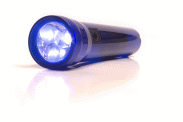
Depending on your needs, and the nature or the disaster which caused the blackout, your priorities may be different. Even before hooking up your generator, if you are lucky enough to have one, and enough gas to run it, often, what is needed first of all is lightning. Usually this will be in the form of flashlights or electric camping lanterns. Both of these use batteries quickly, and bulbs do not last long. The best and most efficient of these are also the most expensive.

Led FlashlightLEDs or Light Emitting Diodes, are the newest generation of flashlights, and not only last longer than their conventional counterparts, but shed more light, providing a less stressful environment for your eyes, and may also give you a chance to read. Furthermore, they are waterproof to a certain degree.


Other types of flashlights such as those you shake, crank, or charge in the sun are just gadgets and should not be relied on in an emergency.

Then,Candles there are more primitive forms of lighting, mostly involving fire. The most common, but also the most dangerous of these are candles.  Candles are cheap, easily found at any 99 cent store, or at an after Christmas sale. Those enclosed in glass are the safest, as once abruptly moved they extinguish themselves.  Despite this there are many hazards with candles, and they should always be paid attention too. Candlesticks are the most dangerous of these as, if they tip over, they will continue burning.  In regards to oil lamps, many large stores sell small 24-hour oil lamps cheaply, these are as safe as pillar candles due to their wide shape will not fall over easily.

Pizza Anyone? And Easy Way to Make It

After traveling from Italy and gaining it’s popularity in the early 19th century, pizza is perhaps one of the most common prepared foods around today. Contrary to many opinions, it is indeed healthy, carrying the ingredients people often eat, but don’t assemble. Pizza

Equal to some sandwiches like Grilled Cheese, with bread, tomato, cheese and sometimes meat, in it’s basic form, pizza contains the crust, sauce, and cheese.

The simplest recipe for a pizza crust is flour, water, and yeast. All-purpose, whole wheat, and bread flour work well. The same things used in Italian bread. A pinch of sugar also helps in activating the yeast. Other ingredients such as salt, cornmeal, and oil are optional.

Kneaded together and left to rise in a warm place, it is then flattened out and a layer of tomato sauce added, leaving a small outer ring of crust exposed for a crispy border. Some stores also carry them without an edge, and those with thicker ones for deep-dish pizzas.

The sauce, composed of diced and puréed tomatoes may also have many components with it’s spices, and occasionally minced vegetables, each type with different combinations.

Tomatoes, a close relative to potatoes and both members of the nightshade family, are toxic to dogs, cats, and many other animals. So while they might beg for a taste, it should not be given.

Toppings may simply include a certain amount of cheese, extra cheese of many flavors, garlic, onions, pulled chicken, olives, or any other meat and vegetables.